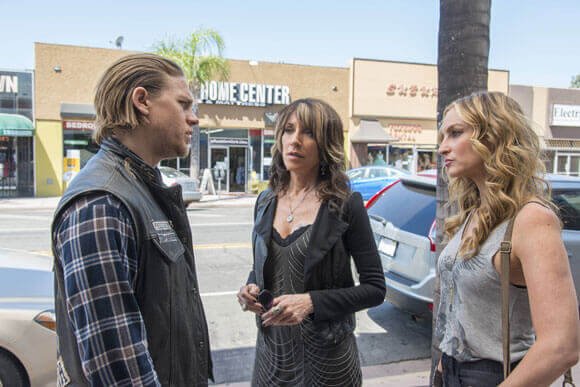
The rumble of Harleys, the visceral code of brotherhood, and the Shakespearean tragedy playing out on the dusty roads of Charming, California – that’s the raw, undeniable essence of Sons of Anarchy. While viewers were gripped by Jax Teller's relentless journey through loyalty, betrayal, and vengeance, the true magic often happened off-camera. Diving into the Sons of Anarchy Season 3 Behind the Scenes reveals a world just as intense, dedicated, and occasionally wild as the one on screen.
Season 3 was a pivotal moment for SAMCRO, sending the club on a harrowing mission to Ireland and pushing Jax to his emotional limits. But what was it like for the cast and crew bringing this complex narrative to life? From the painstaking pursuit of authenticity to the grueling demands of the California heat, the stories from the set are as compelling as the show itself.
At a Glance: Behind the Leather & Chrome
- Authenticity Was King: Actors learned to ride real Harleys, and details like Jax's white Nikes were carefully researched.
- Real-Life Toughness: David Labrava (Happy) was a genuine Hells Angel, and Tommy Flanagan's (Chibs) scars were incorporated into his character's lore.
- Casting Masterstrokes: Ron Perlman replaced another actor as Clay, setting the stage for one of TV's most iconic villains.
- Family Ties: Katey Sagal (Gemma) is married to creator Kurt Sutter, bringing an added layer of depth to the show's central matriarch.
- Grueling Conditions: Filming in Sun Valley, California, meant battling extreme 100-degree Fahrenheit heat, leading to crew fainting and actor hospitalization.
- Dark Themes, Light Set: Despite the show's heavy subject matter, the cast fostered a fun, lighthearted atmosphere to decompress.
The Creative Crucible: Forging Charming's Dark Heart
When Kurt Sutter first pitched Sons of Anarchy to FX, he envisioned a modern-day Hamlet on two wheels, a saga of a reluctant prince navigating a corrupt kingdom. That vision became a reality, growing from a modest 2.8 million viewers at its 2008 debut to an astounding 10 million by its final season in 2014, making it FX's biggest hit. Season 3, which aired in 2010, was a crucial turning point, deepening the mythology and raising the stakes to an unprecedented level as the club ventured into uncharted territory.
Sutter wasn't just the creator; he was the driving force, writing most episodes, directing later ones, and even guest-starring as the memorable incarcerated SAMCRO member, Otto Delaney. This deep personal investment ensured the show's gritty authenticity and emotional resonance. The core concept — Jax Teller (Charlie Hunnam) grappling with his father's legacy and the moral ambiguities of club life, often clashing with his stepfather, Clay Morrow (Ron Perlman) — was the engine that propelled the series, particularly through the intense events of Season 3 where Jax's loyalties and sanity were tested like never before.
One of the earliest and most impactful behind-the-scenes decisions was the recasting of Clay Morrow. Initially, Scott Glenn played the formidable club president in the unaired pilot. However, producers felt they needed a "brasher, more volatile" presence, leading them to Ron Perlman. It’s hard to imagine anyone else inhabiting Clay’s skin now, as Perlman brought a towering, menacing, yet complex performance that defined much of the show’s central conflict, especially against Jax, and was a dominant force throughout Season 3. Interestingly, Perlman and Hunnam would later reunite on screen in Guillermo del Toro's Pacific Rim and 3,2,1… Frankie Go Boom, a testament to their on-screen chemistry.
The Cast & Their Craft: Breathing Life into SAMCRO's Souls
The beating heart of Sons of Anarchy was its ensemble cast, a group of actors who committed wholeheartedly to their roles, often blurring the lines between fiction and reality.
Charlie Hunnam: Becoming Jax Teller
Playing Jackson "Jax" Teller was no small feat. Charlie Hunnam immersed himself in the role, famously maintaining a strict diet and quickly learning to ride a Harley-Davidson. His dedication extended to considering making Jax's distinctive tombstone back tattoo permanent, a testament to how deeply he connected with the character. Jax's journey through Season 3, marked by grief and desperation, demanded a profound emotional performance, which Hunnam delivered with raw intensity.
Katey Sagal: The Matriarch's Real-Life Connection
Gemma Teller Morrow, the formidable matriarch of SAMCRO, was portrayed with stunning power by Katey Sagal. Her performance earned her a Golden Globe, a well-deserved recognition for bringing such a complex, often terrifying, yet deeply loving character to life. Sagal’s marriage to series creator Kurt Sutter added a fascinating layer to their professional collaboration. This real-life partnership undoubtedly influenced the nuanced portrayal of Gemma and Clay’s tumultuous relationship and her often-fraught interactions with Jax, particularly as tensions escalated in Sons of Anarchy Season 3 details and beyond. The "family dinners" hosted by Gemma in the clubhouse, initially symbols of unity, gradually became charged with underlying tension, mirroring the club's unraveling. Sagal also appeared in Sutter's follow-up series, The Bastard Executioner, showcasing their continued creative synergy.
Tommy Flanagan: Chibs' Scars, A Story All Their Own
Tommy Flanagan, who brought the loyal and fierce Chibs Telford to life, carries real facial scars, a result of being jumped over 20 years prior. Kurt Sutter, always keen on authenticity, incorporated these scars into Chibs' character backstory, explaining them as a "Glasgow smile" inflicted by Jimmy O'Phelan – the very antagonist central to Season 3's plotline. Flanagan was initially unaware that "Chibs" meant "knife" in Glaswegian street slang, a serendipitous detail that perfectly aligned with his character's brutal history.
David Labrava: Happy's Real-Life Club Connection
Perhaps the most striking example of the show's commitment to realism comes from David Labrava, who played the stone-cold, tattoo-loving enforcer Happy Lowman. Labrava isn't just an actor; he’s a real-life Hells Angel. He was initially hired as a technical consultant to ensure the show's portrayal of biker culture was authentic. It was Labrava himself who approached Sutter, asking for a role, and Happy Lowman was born. His genuine experience lent an unparalleled air of credibility to SAMCRO's world. Labrava even earned a writing credit for the episode "Hands," further cementing his invaluable contributions.
Ryan Hurst: Opie's Iconic Beard
Ryan Hurst's portrayal of Harry "Opie" Winston, Jax’s best friend and the gentle giant of the club, was instantly recognizable by his thick, iconic beard. This beard wasn't just a stylistic choice; it became central to Opie’s "gentle giant / wild man" persona. Hurst grew the beard specifically for the role and later grew it back for his character in the series Outsiders, showing how deeply intertwined his appearance became with these powerful roles.
Emilio Rivera: From SAMCRO Pilot to Mayan King
Before he became the iconic Marcus Alvarez, President of the Mayans M.C., Emilio Rivera actually played a SAMCRO member named Hawk in the unaired pilot of Sons of Anarchy. That role was eventually dropped and replaced by Tig Trager. However, Rivera's presence was too compelling to ignore, and he later found his perfect fit as Alvarez, a role he reprised as the lead in the spin-off Mayans M.C. This small detail highlights the fluidity of early production and Sutter's ability to recognize talent.
Forging Authenticity: Bikes, Tattoos, and Stuntwork
The world of Sons of Anarchy was built on a foundation of authenticity, from the roar of the engines to the ink on the characters' skin.
Riding Harleys: A Prerequisite for SAMCRO
It wasn't enough for the actors to simply look the part; they had to be the part. A non-negotiable requirement for all SAMCRO actors was to learn how to ride Harley-Davidsons. While some, like Kim Coates (Tig) and David Labrava (Happy), already had extensive riding experience, others faced a learning curve. Ron Perlman, for instance, initially struggled with the heavy bikes, a humorous contrast to Clay's dominant on-screen persona. This commitment ensured that every scene featuring the club on the road felt genuine.
The show featured several iconic Harley-Davidson models. Jax, Clay, and Opie primarily rode custom 2003 Dyna-Glide Super Glide Sports, machines that perfectly suited their leadership roles. Tig and Chibs, known for their agility, favored Harley-Davidson Dyna Street Bobs. Piney Winston, the club's elder statesman, rode a Harley-Davidson Electra Tri-Glide, a three-wheeled behemoth that fit his more contemplative nature. Even the rarer bikes got a nod, like the 1977 Conference edition of the Glide Sport, with only 228 units ever produced, reflecting a deep appreciation for motorcycle culture.
The Art of the Tattoo: Ink and Illusion
Tattoos are synonymous with biker culture, and Sons of Anarchy spared no effort in covering its cast in intricate, symbolic ink. This was a daily, time-consuming process involving extensive use of fake, temporary tattoos for most actors. Each tattoo was meticulously applied to reflect the characters' histories and affiliations, a crucial element of their visual storytelling. For example, Jax's signature reaper back tattoo or Clay’s numerous club patches were not just decoration; they were part of their narrative.
However, as mentioned, David Labrava (Happy) came with his own genuine collection of tattoos, fitting seamlessly into the role. This blend of real and fabricated ink contributed significantly to the show's authentic aesthetic.
Stunts and Stamina: On the Edge of Danger
While stunt doubles were always on hand for the most dangerous sequences, many actors relished performing their own stunts whenever possible. This dedication added an extra layer of realism and intensity to the fight scenes and motorcycle chases that were a staple of Sons of Anarchy, especially during the action-packed Season 3 as the club navigated a perilous journey. Eric Norris, Chuck Norris's son, coordinated stunts for the final season, continuing the legacy of high-quality action.
Charlie Hunnam, ever the method actor, also researched minute details to enhance Jax's authenticity, famously insisting on Jax wearing white Nike trainers, a small but distinctive detail that set his character apart.
The Gritty Reality: Challenges on Set (and Beyond)
Bringing a show as ambitious and physically demanding as Sons of Anarchy to life came with its own set of challenges, some of them quite brutal.
Battling the Sun Valley Heat
Filming in Sun Valley, California, meant contending with extreme temperatures that often soared to 100 degrees Fahrenheit. This wasn't just uncomfortable; it was dangerous. Weekly fainting among crew members was not uncommon, and actors faced serious health risks. Tommy Flanagan (Chibs), in particular, suffered from dehydration and required hospitalization during filming, a stark reminder of the grueling conditions endured behind the scenes to deliver the show's authentic, sun-baked aesthetic. The constant battle against the elements added another layer of resilience required from everyone involved in the production of Season 3.
Dark Themes, Lighthearted Set
Despite the show's intensely dark themes — violence, betrayal, and death were daily occurrences for SAMCRO — the cast fostered a surprisingly fun and lighthearted atmosphere on set. This camaraderie was essential for the actors to unwind and decompress from the heavy emotional toll of their characters' lives. It speaks volumes about the bonds formed off-screen, allowing them to tackle such grim material with professionalism and a sense of shared purpose.
Sheriff Unser's Complicated Loyalty
Beyond the club, characters like Sheriff Wayne Unser, played by Dayton Callie, were integral to the world of Charming. Unser's complicity in SAMCRO's activities stemmed from a deeply held belief that the club, despite its illegalities, ultimately benefited Charming. This complex moral stance led him to actively aid in the deaths of ATF agent June Stahl and Jimmy O'Phelan, pivotal plot points that concluded in the dramatic climax of Season 3, illustrating the blurred lines of justice and loyalty within the show's universe.
The Enduring Legacy: Spin-offs and Symbolism
Sons of Anarchy wasn't just a TV show; it was a phenomenon that left an indelible mark on popular culture. Its success directly led to the spin-off Mayans M.C., which explored the rival biker club, and whispers of a prequel series following Jax's father, John Teller, further illustrate the enduring appeal of Kurt Sutter's created universe.
The series finale, a gut-wrenching conclusion to Jax's tragic arc, saw him driving his Harley into an oncoming truck, a final, deliberate act of sacrifice. The show's very last shot, crows eating bread on the highway beside Jax's blood, became an iconic piece of symbolism. Crows, often associated with death and transformation, consuming bread, a symbol of life and sustenance, with Jax's blood, underscored his ultimate freedom and SAMCRO's anti-establishment ethos. It was a powerful, ambiguous farewell that resonated deeply with fans, a testament to the meticulous storytelling that defined the entire series, including the pivotal events that unfolded during Season 3.
Dive Deeper into Charming's World
The making of Sons of Anarchy was a testament to the passion, dedication, and grit of everyone involved, from the creator to the stunt doubles. The blend of real-life experiences, meticulous research, and a commitment to authenticity crafted a world that felt undeniably real, drawing millions into the captivating, brutal, and often heartbreaking lives of SAMCRO. Understanding these behind-the-scenes stories only deepens appreciation for a show that truly earned its place in television history.
Whether it was the scorching California heat, the painstaking tattoo applications, or the actors' unwavering commitment to learning to ride like genuine club members, every detail contributed to the immersive experience. So, the next time you hear a Harley rumble, remember the dedication that went into creating one of TV's most unforgettable biker sagas. The world of Charming may be fictional, but the effort to bring it to life was intensely, authentically real.