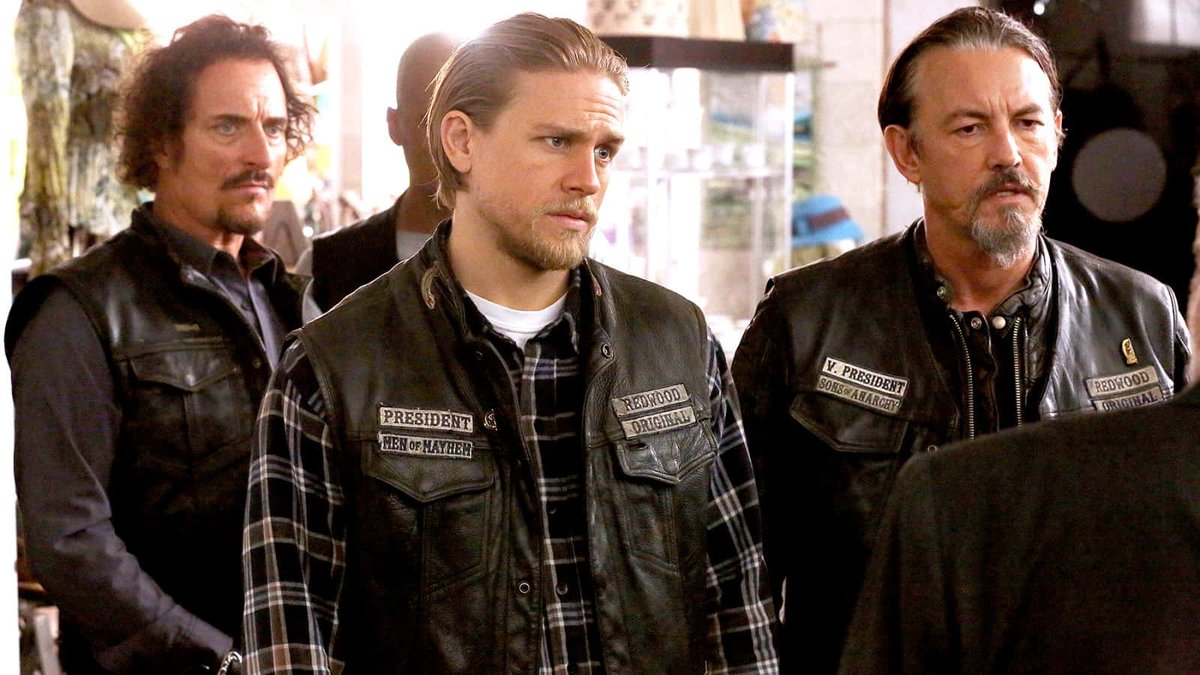
The rumble of Harleys, the clash of loyalty and lawlessness, and the raw, often brutal, heart of a family struggling to survive – that's the essence of Sons of Anarchy. When Season 3 hit screens, the critical question wasn't if it would deliver, but how it would sustain the explosive quality of its predecessors. The consensus on Sons of Anarchy Season 3 Critical Reception was clear: it didn't just maintain the show's incredibly high standards; it deepened the narrative, tested its characters to their breaking point, and solidified its place among television's elite dramas.
This wasn't a season for the faint of heart. Critics lauded its bare-knuckled approach, the rapid-fire twists, and its continued exploration of profound themes against a backdrop of bone-crunching action. It proved that even as the Sons' world grew darker and more complicated, the storytelling only improved.
At a Glance: Why Season 3 Struck a Chord
- Consistent Excellence: Critics widely agreed the season maintained, and in some ways surpassed, the quality of its highly acclaimed predecessors, cementing its status as a top-tier cable drama.
- Thematic Depth: Rich exploration of biblical themes like fathers and sons, honor, dishonor, and the complex, often contradictory, nature of family and loyalty.
- Powerful Performances: Particular praise for the well-drawn characters, especially the strong women in SAMCRO's orbit, and a standout performance from Katy Segal as Gemma.
- Tightly Plotted & Action-Packed: A narrative that was both character-driven and delivered exciting, high-stakes action sequences, with rapid twists keeping viewers on the edge.
- Expanded Scope: The season ventured beyond Charming, significantly broadening the show's world and challenges.
Upping the Ante: The Foundation of Season 3's Praise
Coming off two seasons that had already established Sons of Anarchy as a critical darling, Season 3 had a heavy burden of expectation. Yet, it rose to the occasion, proving itself a masterclass in serialized drama. Critics frequently described it as one of television's best dramas, a title earned through its relentless pace, compelling character arcs, and unflinching look at a subculture often glamorized or demonized without true understanding.
The season didn't shy away from what made the show unique: it remained "bare-knuckled, funny, and crass," unafraid to explore the darker corners of its characters' psyches while still delivering moments of unexpected humor. What truly stood out, however, was the show's capacity for rapid-fire twists. Just when you thought you had a handle on the shifting alliances and impending dangers, another curveball would land, propelling the story forward with relentless momentum. This narrative agility, combined with a commitment to its "well-drawn characters," ensured that even as the show expanded its scope geographically and thematically, its core emotional resonance remained intact.
The Philosophical Core: Fathers, Sons, and Outlaw Morality
Beyond the visceral thrills, Sons of Anarchy Season 3 delved deep into themes that resonated far beyond the confines of a motorcycle club. Critics consistently highlighted the "biblical themes of fathers and sons, honor, and dishonor" woven throughout the narrative. At its heart, this season was a profound meditation on legacy and the often-destructive cycle of violence and loyalty passed down through generations.
Jax Teller's internal struggle was never more pronounced than in Season 3. With his son, Abel, kidnapped, his loyalty to his outlaw club was tested by its inherent lawlessness in ways that forced him to confront his future head-on. This personal crisis became the lens through which the show explored how SAMCRO's "perverse and illegal 'family values'" were paradoxically rooted in principles strikingly similar to those held by law-abiding citizens. It was a complex and nuanced deconstruction of tribe loyalty, family bonds, and the insidious nature of business treachery, making the Sons far more than mere "motorcycle thugs" in the eyes of critics. If you're interested in understanding the deeper themes of Sons of Anarchy that captivated critics, Season 3 offers a rich tapestry of study.
Characters in Crisis: Performances That Elevated the Drama
A show, no matter how well-plotted, is only as strong as its characters and the actors who portray them. In Season 3, the cast, particularly the women, received significant critical praise. The "strong women in SAMCRO and its orbit" were not just background figures; they were pivotal, driving much of the emotional and strategic drama.
Katy Segal's portrayal of Gemma Teller Morrow was consistently singled out as "powerfully acted." Gemma's journey in Season 3 – on the lam, grappling with the trauma of past events, and receiving unexpected news from her past – was a masterclass in raw vulnerability and fierce resilience. Segal brought a nuanced intensity to a character who could easily have become a caricature, grounding Gemma in a believable, if often terrifying, reality. Her performance was a cornerstone of the season's critical acclaim, demonstrating her incredible range and depth. To truly appreciate Katy Segal's powerful portrayal of Gemma, look no further than the emotional gauntlet she runs in Season 3.
Jax, too, was pushed to his limits. The arc forced him into increasingly difficult choices, often pitting his desire for a better future for his son against his inherent loyalty to the club and its violent legacy. These internal and external pressures allowed Charlie Hunnam to deliver some of his most compelling work, showcasing the complex evolution of Jax Teller as he navigated a moral minefield.
Plotting with Precision: Twists, Turns, and Terrifying Action
Season 3 was described as a "tightly plotted character drama with bone-crunching action," a combination that kept critics engrossed. The central catalyst for the season's narrative — the kidnapping of Jax’s son, Abel — provided a clear, urgent objective that propelled the club into uncharted territory. This singular focus allowed for a thrilling expansion of the show's scope, introducing new formidable adversaries like the ATF and the Russians, while also forcing the club to confront "old wounds."
Specific episodes stood out for their intensity and pivotal plot developments:
- "NS": The season opener immediately set the tone, throwing SAMCRO into a maelstrom of external threats.
- "SO": The aftermath of Abel's kidnapping became the defining turmoil for Jax, setting the stage for his most difficult decisions.
- "June Wedding": With a SAMCRO member held hostage, the stakes escalated, forcing Jax to weigh revenge against the greater good of Charming.
- "Bainne": This episode saw the club on a relentless man hunt, culminating in one of Jax's toughest moral quandaries.
- "Fírinne": The introduction of the IRA’s demands signaled the club’s forced foray into international criminal dealings, expanding the world far beyond Charming.
The narrative engine was firing on all cylinders, ensuring that every episode felt significant, building towards a climactic resolution that would profoundly impact the Sons.
The Ireland Arc: A Bold Expansion
Perhaps the most ambitious aspect of Season 3 was its bold move across the Atlantic. The shift of a significant portion of the storyline to Belfast, Northern Ireland, represented a substantial "expansion of the show's scope." This geographical pivot allowed the series to delve deeper into the origins of the club's arms dealing, the history of the IRA, and the Teller family's own complicated past.
Critics generally applauded this expansion for its ambition and for further illustrating the intricate, far-reaching web of SAMCRO's operations and alliances. Episodes like "Fírinne," where the IRA demanded proof of a defector, and "Lochán Mór," which saw SAMCRO visiting another charter, demonstrated the global stakes involved. While such an extensive storyline could have risked feeling forced, the ground truth suggests it enhanced the show's depth, offering a richer context for the Sons' struggles and for Jax's quest to find his son. This international component added a fresh layer of intrigue and danger, confirming that Sons of Anarchy was a show unwilling to rest on its laurels.
A "Wild Fantasy" Tempered by Reality: Balancing Melodrama and Verity
One fascinating aspect of the critical reception was the description of Sons of Anarchy as "wild fantasy and melodrama tempered by verity." This phrase perfectly encapsulates the show's ability to navigate extreme scenarios and high-octane drama without losing its grounding in believable human emotion and consequence.
The show masterfully balanced the exhilarating, often outlandish, aspects of outlaw life with thoughtful examinations of its underlying principles. It wasn't just about explosions and bike chases; it was about the loyalty, betrayal, love, and loss that drove these characters. This blend made the series "exciting and thoughtful in its deconstruction of notions like tribe loyalty, family bonds, and business treachery." You were pulled into the fantasy, but you were also asked to consider the profound implications of these characters' choices. Even when the plot veered into the operatic, the emotional truth of the performances and the consistent thematic explorations kept it anchored, preventing it from spiraling into mere spectacle.
Addressing the Naysayers: Minor Criticisms and the Broader Landscape
While overwhelmingly positive, the critical reception for Season 3 wasn't entirely without nuance. Some critics observed that, when compared to other groundbreaking cable dramas of its era, the show could sometimes feel "noisy but relatively low-octane." This particular assessment, however, was explicitly based on a review of just four episodes, which might not have captured the full trajectory and depth of the entire season.
It's a fair point to consider that in a landscape populated by highly cerebral, subtly unfolding dramas, Sons of Anarchy often opted for a more direct, explosive approach. Its "noise" could be seen as its visceral energy, its "low octane" perhaps a misinterpretation of its character-driven pacing disguised by action. However, for the majority of critics, this was a minor quibble, overshadowed by the show's undeniable strengths in storytelling, character development, and performance. The sheer dramatic weight and thematic richness typically outweighed any perceived excesses or comparative pacing issues.
Fan Favorites: Echoing Critical Acclaim
It’s often a testament to a show’s quality when critical and popular opinion align. Season 3 of Sons of Anarchy achieved this harmony, with many of the episodes praised by critics also becoming fan favorites. The fan-voted "best episodes" on platforms like episode.ninja often highlighted the same pivotal moments and emotional turning points that critics lauded.
Episodes like "Bainne" and "Fírinne," which showcased Jax making his "toughest decision" and the club dealing with intense IRA demands, resonated deeply with viewers. The arc where Jax "conspires with an unlikely source to help his mom, club, and son" in "Turning and Turning" and the club's "unprecedented protection run" in "Turas" also proved highly popular. This alignment underscores the season's universal appeal: its ability to combine gripping plot with profound character stakes, a formula that kept both critics and audiences hooked. Whether it was the raw emotion of Gemma dealing with family issues in "Oiled" or the club's dangerous negotiations to protect their territory in "The Push," the season consistently delivered.
SAMCRO's Enduring Appeal: More Than Just a Motorcycle Club
What truly separates Sons of Anarchy Season 3 from being just another crime drama is its profound ability to humanize the outlaw. The critical reception consistently emphasized how the show presented its characters as more than just "motorcycle thugs." Instead, SAMCRO was portrayed as a complex entity, a family unit with its own twisted morality, fierce loyalties, and internal struggles.
The show invited you to understand their world, to see the principles that drove them, even when those principles led to violence and illegal activity. This nuanced portrayal is what gave the show its lasting power and resonance. It explored the paradox of a club that both protected Charming, California, from drug dealers, yet simultaneously ran a "lucrative illegal arms business." This duality was a central theme, reminding viewers that black and white rarely exist in the world of the Sons. For a more comprehensive look, you might want to delve into a deeper look into SAMCRO's unique culture and how it defines their existence.
The Legacy of Season 3: Solidifying SOA's Place
Sons of Anarchy Season 3 didn't just meet expectations; it exceeded them, delivering a season that was both critically acclaimed and beloved by fans. It expanded the show's narrative canvas, deepened its thematic explorations, and provided some of the most memorable performances in the series' run. This season was a powerful demonstration of how character-driven storytelling, even within the confines of high-octane action and outlaw mythology, can achieve genuine dramatic weight and critical recognition.
It cemented Sons of Anarchy's place as not just a good show, but a great one – a piece of television that dared to explore the morally ambiguous corners of the human heart with unflinching honesty. The journey through Season 3 was a testament to the show's maturity and ambition, proving that even as life for the Sons became undeniably "darker and more complicated," the quality of the storytelling only soared.
For those eager to revisit this pivotal chapter or experience it for the first time, Explore Sons of Anarchy Season 3 to witness why it resonated so deeply with critics and audiences alike.